Learning has evolved beyond traditional classrooms and corporate training rooms.
Research suggests that learners who set clear career goals engage with learning four times more than those who don’t, while skills required for modern work have already changed by 25% since 2015, expected to double by 2027.
Additionally, 90% of companies prioritize learning opportunities as a top strategy to retain employees.
Professional learning communities offer an empowering way to meet these changing needs.
These collaborative networks unite individuals with shared goals, fostering continuous growth through peer-to-peer knowledge sharing and collective problem-solving.
This guide explores how to build thriving professional learning communities that generate impactful results.
You’ll learn foundational strategies, practical best practices, and draw inspiration from successful examples that have transformed organizations and careers.
What is a Professional Learning Community (PLC)?
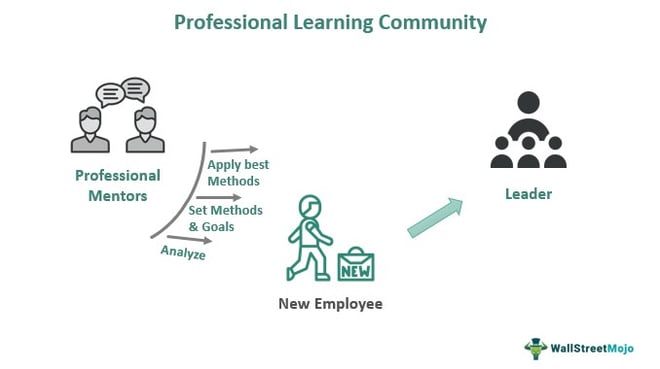
A professional learning community is a collaborative network where individuals with shared professional interests or goals come together to learn, share knowledge, and improve their practice through ongoing dialogue and mutual support.
Unlike general online communities focused on networking or social interaction, professional learning communities have distinct characteristics that set them apart:
Focused learning objectives. Members join with specific professional development goals, whether mastering new technologies, improving leadership skills, or staying current with industry trends.
Collaborative knowledge creation. Rather than passive content consumption, PLCs emphasize active participation where members contribute insights, ask questions, and solve problems together.
Continuous improvement mindset. Professional learning communities foster ongoing reflection and adaptation, encouraging members to apply new learning and share results with the group.
Structured yet flexible approach. While maintaining clear purposes and guidelines, effective PLCs adapt to member needs and evolving industry demands.
For example, a group of software developers might form a professional learning community around DevOps practices, sharing case studies, discussing implementation challenges, and collectively exploring new tools. Similarly, healthcare professionals might create a PLC focused on patient care innovations, combining research findings with practical experience.
History And Evolution Of Professional Learning Communities
Learning alongside peers has been a part of human culture since ancient times. From guild apprenticeships in Mesopotamia to medieval monastery schools, people have always collaborated to share knowledge and build skills.
The formal concept of professional learning communities (PLCs) emerged in the 1990s, inspired by the work of Jean Lave and Etienne Wenger, who introduced the idea of “communities of practice” groups learning together through participation and shared experiences.
In education, PLCs transformed how schools approached professional development, shifting from isolated workshops to collaborative team learning focused on improving student outcomes.
At the same time, businesses adopted similar community models to support knowledge sharing and innovation.
Advances in technology further evolved PLCs, enabling digital and hybrid communities that connect learners globally. Today’s professional learning communities blend face-to-face interaction with online collaboration, allowing continuous learning, peer support, and shared problem-solving.
The enduring success of professional learning communities lies in their social nature: learning thrives best in groups where members share goals, resources, and expertise.
Understanding this history helps us create effective, adaptable communities that grow with changing needs and technology.
Why Professional Learning Communities Matter Today
The modern workplace demands continuous adaptation. Almost 70% of respondents indicated digital fluency continues to increase as an important capability within their organizations, while 77% of employers are struggling to fill roles.
This skills gap creates both challenges and opportunities for forward-thinking professionals and organizations.
The upskilling imperative has never been stronger
Traditional education and training methods cannot keep pace with rapidly evolving industry requirements. Four in five people want to learn more about AI applications in their profession, yet many organizations struggle to provide relevant, timely learning opportunities. Professional learning communities fill this gap by enabling peer-to-peer knowledge transfer and collective skill building.
Remote work has transformed learning needs
The shift toward distributed teams has created new challenges for professional development. 91% of companies surveyed said they prioritize online education programs over traditional ones. Professional learning communities provide the social connection and collaborative learning that remote workers need to stay engaged and grow professionally.
Knowledge sharing drives innovation
Organizations that facilitate knowledge sharing through professional learning communities see measurable benefits. Research suggests that participation in learning communities impacts teaching practice, and these effects extend beyond individual development to organizational capability building.
Isolation undermines professional growth
Remote workers and educators often struggle with professional isolation, limiting their access to informal learning opportunities. Professional learning communities recreate the collaborative environment that drives innovation and problem-solving in high-performing teams.
Core Benefits of Creating a PLC
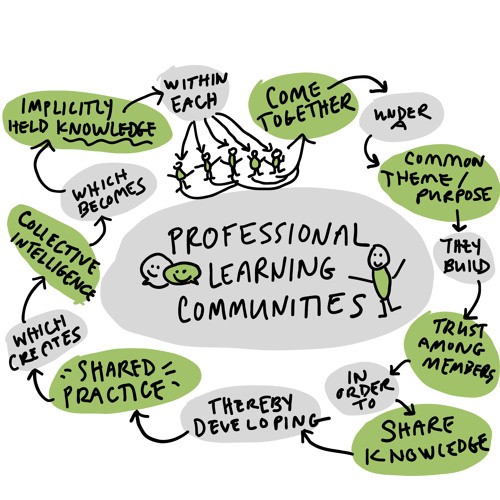
Knowledge Sharing That Accelerates Learning
Professional learning communities create multiplier effects for individual learning efforts.
When members share experiences, case studies, and solutions, everyone benefits from collective wisdom that would take years to acquire individually.
Research validates this approach. Teacher-centered collaborative activities seem to be more effective in improving outcomes than learning activities that do not necessarily involve such collaborative opportunities.
Collaboration and Networking That Opens Opportunities
Beyond immediate learning benefits, professional learning communities create valuable professional networks. Members develop relationships that lead to career opportunities, project collaborations, and knowledge partnerships that extend far beyond the community itself.
Continuous Growth That Keeps Skills Current
Professional learning communities provide ongoing exposure to new ideas, tools, and approaches. This continuous learning environment helps members stay ahead of industry trends rather than reacting to changes after they become critical.
Improved Engagement Through Shared Purpose
Learning opportunities are the top retention strategy for 90% of companies concerned about employee retention.
Professional learning communities tap into intrinsic motivation by connecting individual growth with meaningful professional challenges.
Professional Learning Communities in Action
Microsoft’s Internal Communities of Practice have enabled knowledge sharing across global teams, resulting in faster product development cycles and improved innovation metrics.
Salesforce Trailblazer Community connects over 4 million developers, administrators, and users who share knowledge, celebrate achievements, and drive product innovation through collaborative learning.
Healthcare Quality Improvement Networks have demonstrated measurable improvements in patient outcomes when professionals share best practices through structured learning communities.
Common Challenges in Building Professional Learning Communities
Lack of Clear Goals and Direction
Many professional learning communities fail because they lack specific, measurable objectives. Without clear purposes, members become confused about expectations and gradually lose interest.
Solution: Define specific learning outcomes, success metrics, and member expectations from the beginning.
Low Participation and Engagement
Passive membership kills community momentum. When only a small percentage of members actively contribute, discussions stagnate and value diminishes for everyone.
Solution: Design engagement systems that reward participation and make contributing easy and valuable.
Poor Structure or Leadership
Communities without effective facilitation often devolve into unfocused conversations or, worse, become dominated by a few vocal members who discourage broader participation.
Solution: Establish clear leadership roles, moderation guidelines, and structured discussion formats.
Technology Barriers That Limit Access
Complex platforms or poorly designed interfaces create friction that prevents members from participating effectively, particularly for those with varying technical comfort levels.
Solution: Choose user-friendly platforms and provide adequate technical support and training.
Trust Issues and Fear of Sharing
Professionals may hesitate to share challenges, mistakes, or incomplete ideas, fearing judgment or competitive disadvantage. This reluctance severely limits learning potential.
Solution: Create psychologically safe environments through clear community guidelines and leadership modeling of vulnerability.
Expert Insight: According to learning and development researcher Dr. Amy Edmondson, psychological safety is the foundation of effective professional learning. Communities that establish trust and encourage experimentation see significantly higher knowledge sharing and innovation rates.
Best Practices for Thriving PLCs
Start Small and Scale Thoughtfully
Launch professional learning communities with manageable member counts that allow for meaningful interaction and relationship building. Higher functioning PLCs predict higher levels of teacher collective efficacy, but this effectiveness develops through quality interactions rather than large membership numbers.
Begin with 15-25 committed members who share strong interest in community objectives. This size enables everyone to know each other while providing sufficient diversity of perspectives and experiences.
Focus on community culture development before expanding membership. Established norms and practices make it easier to integrate new members without disrupting community dynamics.
Blend Online and Offline Learning Opportunities
While digital platforms enable global participation and convenient access, combining virtual and in-person elements creates stronger community bonds and more comprehensive learning experiences.
Schedule regular virtual meetups for broader participation while organizing periodic in-person gatherings for deeper relationship building.
Create hybrid learning events that accommodate both local and remote participants through video conferencing and collaborative tools.
Encourage Open Communication and Feedback
Transparency and honest feedback accelerate both individual and community development. Create multiple channels for members to share ideas, concerns, and suggestions.
Implement regular community retrospectives where members can discuss what’s working well and what needs improvement.
Establish anonymous feedback mechanisms for sensitive issues that members might hesitate to raise publicly.
Reward Active Contributors
Recognition systems motivate continued participation while highlighting valuable contributions for other members.
Develop gamification elements such as badges for milestone achievements, points for helpful contributions, and leaderboards that celebrate different types of value creation.
Feature member spotlights that showcase individual achievements and share their learning journeys with the broader community.
Create advancement pathways where active contributors can take on leadership roles or special recognition within the community.
Share Success Stories and Build Trust
Testimonials and case studies demonstrate tangible value while building credibility for the community approach.
Document member achievements that result from community participation, including career advances, skill development, and project successes.
Create case study collections that show how community knowledge has been applied to solve real problems.
Facilitate peer testimonials where members share how community participation has impacted their professional development.
Tools and Technologies That Can Help You Build A PLC
Community Platform Designed for Learning
BuddyBoss offers comprehensive features specifically designed for professional learning communities, including integrated learning management systems, social networking capabilities, and mobile apps that keep members connected anywhere.
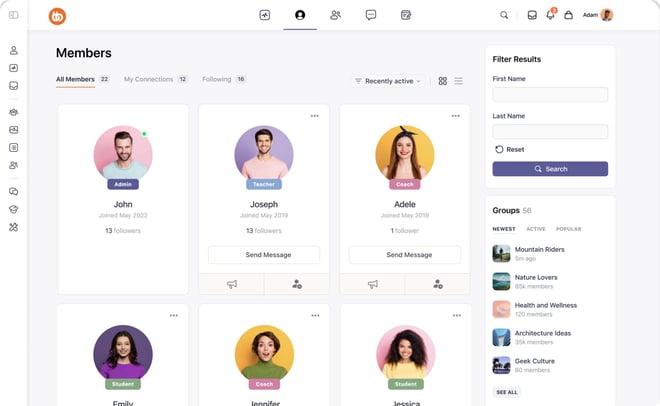
Key BuddyBoss features include:
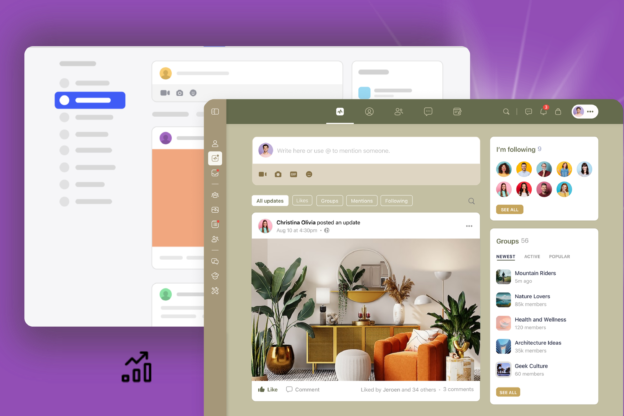
Social Interaction: Members can create rich profiles, join interest-based groups, and interact through activity feeds, comments, likes, and direct messaging, just like top social media platforms.
Course Management: BuddyBoss integrates with leading LMS plugins like LearnDash and TutorLMS to deliver interactive courses complete with quizzes, assignments, progress tracking, and certificates all embedded within the community environment.
Mobile Accessibility: With native iOS and Android apps, learners enjoy push notifications, offline access (BuddyBoss App supports offline access to certain course content when configured with LMS integrations), and seamless engagement on the go, enhancing course completion and community involvement.
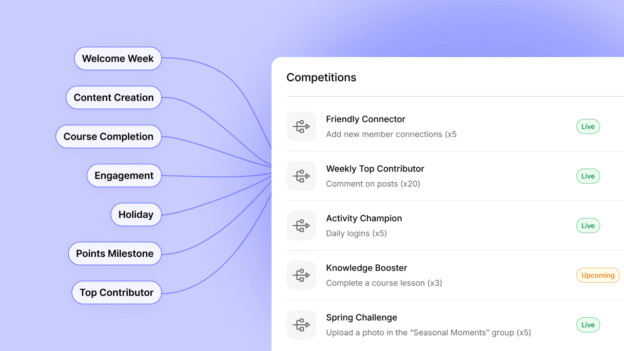
Gamification: Motivate learners with badges, points, leaderboards, and achievements that reward participation and progress (Native feature in BuddyBoss Platform Pro).
Event Management: BuddyBoss supports event management via integrations and can connect with tools like Zoom for live sessions that foster real-time collaboration.
Membership and Monetization: Control access through flexible membership levels, payment gateways, and user role management, enabling sustainable community growth.
Performance and Security: BuddyBoss is optimized for performance and supports caching and database management when configured with hosting or plugins. Offers robust security features to protect your community’s data.
BuddyBoss reduces reliance on fragmented setups by bringing core community and engagement features together, while supporting integrations for learning management, events, and live sessions.
With BuddyBoss, you can build vibrant online spaces where members collaborate, learn, and grow together, powered by technology that’s designed to scale with your vision.
Communication and Collaboration Tools
Slack and Microsoft Teams excel at real-time communication and file sharing, particularly for communities with frequent informal interactions.
Zoom and Google Meet enable face-to-face discussions, webinars, and collaborative sessions that build stronger relationships.
Miro and Mural support visual collaboration for brainstorming, planning, and problem-solving activities.
Learning Management Integration
Many professional learning communities benefit from structured learning paths alongside peer discussions. Platforms that integrate community features with learning management capabilities provide comprehensive solutions.
Content libraries organized by topic, skill level, and format make it easy for members to find relevant resources.
Progress tracking systems help members monitor their development and identify areas for additional focus.
Certification pathways add structure and recognition to learning achievements within the community context.
Security and Privacy Considerations
Professional learning communities often involve sharing sensitive information about challenges, strategies, and organizational practices. Robust security measures protect member trust and encourage open sharing.
Data protection protocols ensure member information and shared content remain secure and properly controlled.
Privacy controls allow members to manage what information they share and with whom.
Content ownership policies clarify intellectual property rights for community-generated resources and discussions.
FAQs on Professional Learning Communities
What is the main purpose of a professional learning community?
The primary purpose of professional learning communities is to accelerate professional development through collaborative learning, knowledge sharing, and peer support. Unlike traditional training programs, PLCs create ongoing learning environments where members continuously develop skills, solve problems together, and adapt to changing professional demands.
How do you measure the success of a professional learning community?
Effective measurement combines engagement metrics with learning outcomes. Track active participation rates, knowledge sharing frequency, and member retention alongside skill development assessments, career advancement, and application of community learning in professional practice. Regular member surveys provide qualitative insights into community value and satisfaction.
Can small businesses and individual professionals create effective PLCs?
Professional learning communities work effectively at any scale. Small businesses can create internal PLCs for employee development or join industry-specific external communities. Individual professionals can initiate PLCs around specific skills or challenges, often finding that others share similar learning needs and are eager to collaborate.
How is a professional learning community different from a general online community?
Professional learning communities focus specifically on skill development and knowledge sharing with structured learning objectives, while general online communities may emphasize social interaction, networking, or broad industry discussions. PLCs typically have more intentional facilitation, curated content, and measurable learning outcomes compared to general professional networks.
Building Your Professional Learning Community Success Story
Your professional growth and organizational success increasingly depend on your ability to learn continuously and collaborate effectively. Professional learning communities provide the structure, support, and motivation to make this vision reality.
Ready to start your professional learning community journey? BuddyBoss provides the complete platform solution to create effective professional learning communities that drive real results for members and organizations.
Stat Sources- https://positivepsychology.com/benefits-goal-setting/, https://www.getbenepass.com/blog/employee-retention-statistics

 Article