If you’re a course creator, coach, or membership site owner using BuddyBoss, your leadership is the heartbeat of your community.
The online community leaders play a pivotal role in creating safe, engaging, and inclusive environments.
As more people turn to virtual spaces for connection and collaboration, the need for exceptional community leadership has never been greater.
The moderators/community leaders are the one who shape the tone, keep things running smoothly, and make everyone feel welcome.
In this guide, we've covered 7 must-have traits to lead your online community successfully in 2025 and beyond.
Who is an Online Community Leader?
An online community leader is someone responsible for managing, guiding, and nurturing a digital community.
Their primary goal is to create an atmosphere of trust, respect, and collaboration.
These leaders may be volunteers or professionals, and their tasks range from moderating discussions to setting community goals, onboarding new members, and resolving conflicts.
Responsibilities of a Good Community Leader
1. Setting Clear Rules and Guidelines
Every strong community starts with clear expectations. An effective online community leader establishes straightforward, easy-to-follow rules that guide how members interact. These guidelines help maintain a respectful, welcoming environment where people feel safe and supported.
2. Encouraging Member Participation
Engagement is essential to keeping a community vibrant. Great leaders actively spark conversations, ask thoughtful questions, share interesting content, and organize interactive activities to keep members involved. Their goal is to foster a space where people feel comfortable contributing and connecting with others.
3. Managing Conflict with Calm and Fairness
Disagreements are natural in any group setting. A strong leader handles them calmly and impartially listening to all sides, de-escalating tension, and guiding the conversation toward resolution. This helps maintain trust and reinforces the community’s values of mutual respect.
4. Offering Ongoing Support and Guidance
Community leaders play a hands-on role in helping members feel informed and empowered. Whether it’s offering helpful resources, answering questions, or recognizing contributions, proactive support builds confidence and encourages deeper engagement.
5. Monitoring Growth and Community Health
A successful leader pays close attention to how the community evolves. This includes tracking membership trends, monitoring engagement levels, and identifying which types of content resonate most. These insights help guide future decisions and ensure the community continues to thrive.
Building Your Community On WordPress With BuddyBoss?
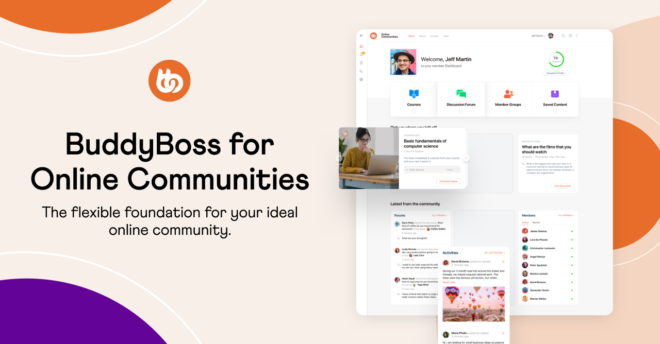
You’re in the perfect place to lead with impact. These leadership strategies shine brightest in a space you own and control. With features like activity feeds, private groups, and member profiles, BuddyBoss gives you the tools to apply these traits in a fully branded, distraction-free environment built around your vision.
Top 7 Qualities of a Good Leader in an Online Community

Let’s explore the five essential qualities of an effective online leader, backed by real-life examples and practices.
1. Empathy and Emotional Intelligence
Empathy is a must for any online leader. In digital spaces, we don’t have body language or tone of voice to rely on. That’s why emotional intelligence is so important. It helps leaders understand concerns, pick up on tone, and respond with care.
Example: Reddit’s “r/AmItheAsshole” Moderators
This large subreddit thrives thanks to moderators who lead with empathy. When a heated thread about family issues started spiraling, they didn’t just shut it down. Instead, they posted a thoughtful message that addressed both sides, acknowledged the emotional triggers, and reminded users of the community’s values around respectful storytelling.
The result? Many users thanked the mods for handling the situation with care.
Key Takeaway: Listening without judgment and validating people’s emotions creates a safe, respectful space, a key trait of strong online leadership.
2. Strong Communication Skills
Clarity is everything in the digital world. Online leaders must communicate directions, values, and feedback in a way that leaves no room for misinterpretation across tools like Slack, Discord, Facebook Groups, or Circle.
Example: Buffer’s Transparent Remote Culture
Buffer, a fully remote company, leads with transparent and clear communication. CEO Joel Gascoigne regularly shares decisions, challenges, and strategies in open Slack channels and blog posts. This has made Buffer not just a company, but a community where team members and customers alike feel included and informed.
Key Takeaway: Great leaders master tone, timing, and platform-specific etiquette. Whether it’s replying to a comment thread or drafting community announcements.
3. Consistency and Reliability
In online spaces, consistency breeds credibility. A leader who shows up regularly — through posts, updates, live sessions, or even quiet moderation — builds trust and strengthens engagement.
Example: Pat Flynn’s SPI (Smart Passive Income) Community
Entrepreneur Pat Flynn built a thriving online learning community by showing up every week for his audience through podcast episodes, live Q&As, emails, and forum engagement. His predictable cadence and availability reassured members that they weren’t alone on their entrepreneurial journey.
Key Takeaway: Consistent leadership sets the rhythm of the community. Sporadic interaction can make members feel lost, while predictable engagement builds momentum.
4. Conflict Resolution and Mediation
Disagreements in online communities are inevitable. Effective leaders don’t suppress them but they guide resolution with fairness, calm, and structure.
Example: The “Modmail” System on Reddit Communities
Many high-traffic subreddits like r/science have formal conflict resolution frameworks. When a viral misinformation post led to a polarized debate, moderators used Reddit’s Modmail system to mediate in private. They enforced evidence-based rules, invited feedback, and issued a community-wide clarification that balanced both transparency and decorum.
Key Takeaway: Having a conflict resolution plan and using it with grace turns difficult moments into growth opportunities for the whole community.
5. Vision and Purpose
The most inspiring online leaders don’t just manage, they mobilize. They have a vision, articulate it clearly, and bring members along for the journey.
Example: Marie Forleo’s B-School Community
Marie Forleo’s B-School is not just an online course but a mission-driven community for entrepreneurs. From the moment someone joins, there’s a clear message: You’re here to build a business and life you love. This purpose fuels peer support, user-generated success stories, and long-term engagement even after the course ends.
Key Takeaway: Communities thrive when members feel part of something bigger. A clear vision helps them see how their contributions matter.
6. Inclusiveness and Diversity Awareness
Every member should feel seen and heard. This requires conscious effort from using inclusive language to showcasing diverse member stories.
Example: Elpha — A Professional Network for Women in Tech
Elpha promotes inclusion by design. Its founder, Cadran Cowansage, ensures BIPOC voices are amplified, community guidelines are inclusive, and events address intersectional challenges. This focus has made it a safe space for marginalized professionals.
Pro Tip: Inclusive leadership means proactively identifying and removing barriers not waiting for members to flag them.
7. Adaptability and Tech-Savviness
Technology shifts rapidly. Online leaders must be comfortable with new platforms, tools, and evolving digital behavior.
Example: Mighty Networks Migration Success
When entrepreneur and coach Gina Bianchini noticed Facebook Groups limiting reach and engagement, she built Mighty Networks then transitioned her own communities there. The move allowed better member organization, personalization, and community-led content creation.
Key Takeaway: Adapting to new tools doesn’t mean chasing trends it’s about finding platforms that better serve your community’s purpose.
How Online Leadership Differs from In-Person Leadership
Leading a group online isn’t the same as doing it in person. While both roles need strong communication and people skills, the way those skills are used can be very different.
In face-to-face settings, a leader can rely on body language, tone of voice, and eye contact to show kindness or authority.
But online, all of that has to come through text which isn’t always easy.
In fact, a study in the Journal of Computer-Mediated Communication found that messages sent online are 60% more likely to be misunderstood than ones delivered in person.
That means online leaders have to be extra careful with how they write, using friendly language, emojis, and clear explanations to make sure their message comes across the right way.
Speed is another big difference.
In offline settings, leaders often have time to think through decisions, hold meetings, or talk things out.
But online, things move fast. Comments can flood in within seconds, and issues can spiral quickly.
That’s why great online leaders are quick thinkers; they step in fast to stop problems and keep the conversation flowing smoothly.
And let’s not forget the tech side.
Online leaders need to know their tools whether they’re running a Discord server, a Facebook group, or a brand forum.
According to a CMX report, over 83% of community managers use at least three digital tools to run their groups.
These tools help with scheduling posts, tracking engagement, and handling rules or reports. Without tech skills, it’s easy to fall behind.
Online Leadership vs Offline or In-Person Leadership
| Aspect | Online Leader | Offline Leader |
| Communication | Text-based; must be clear and friendly | Face-to-face; uses tone and body language |
| Tone & Emotion | Shown through words, emojis, and punctuation | Expressed naturally through voice and gestures |
| Speed of Decisions | Needs quick responses due to fast-paced interactions | Has more time to reflect and discuss |
| Conflict Handling | Often public; must act quickly and fairly | Usually private; handled through in-person talks |
| Tools Required | Needs to use digital platforms and moderation tools | Uses meeting rooms, materials, and physical setups |
| Measuring Impact | Tracks likes, comments, growth stats | Relies on observation and direct feedback |
Examples Of Online Community Leaders Demonstrating Their Skills
Rosie Sherry (Indie Hackers, Rosieland) uses newsletters, Twitter, and community posts to communicate clearly with makers and startup founders.

Cassidy Williams (Tech influencer) adds humor, emojis, and personality to posts on platforms like Discord and GitHub, keeping things fun and relatable.

Discord moderators for MrBeast’s massive server respond to member queries or rule violations in seconds to keep chats safe and smooth.

Reddit moderators in large subreddits like r/AskHistorians handle disputes quickly using mod tools and clear, posted rules.

Glossier's Community Team uses Slack, custom forums, and analytics tools to manage customer feedback and fan interaction.
Dev.to moderators ensure a respectful global coding community, adjusting for time zones and cultural differences with inclusive guidelines. Check the below screenshot-

FAQs on Online Community Leadership
1. What’s the difference between managing an online and offline community?
Online leaders rely heavily on written communication and tech tools. They have to be more intentional about clarity, tone, and speed. In contrast, offline leaders can lean on face-to-face interactions and non-verbal cues. Online leadership also tends to move faster and requires more flexibility with tools and platforms.
2. How do I build trust as an online community leader?
Trust is built through consistency, transparency, responsiveness, and fairness. Show up regularly, communicate openly, listen to feedback, and enforce rules fairly across the board.
3. Can a community leader also be the content creator or course instructor?
Yes, especially in communities built around education, coaching, or membership sites. In fact, having the leader also serve as the expert or guide can deepen trust and increase engagement just make sure you balance both roles well.
4. How do I handle conflicts in my online community?
Set clear community rules from the start, and enforce them calmly and consistently. Listen to all sides, de-escalate quickly, and move discussions toward resolution. Use tools like private messaging or modmail to avoid public disputes whenever possible.
5. Why is empathy such a critical trait for online community leaders?
Because digital communication often lacks nuance, empathy helps bridge the emotional gap. Leaders who show empathy create a more supportive, understanding environment—making it easier for members to feel safe, stay engaged, and contribute openly.
6. How can I promote inclusiveness in my online community?
Use inclusive language, amplify diverse voices, and actively seek feedback from underrepresented groups. Regularly review community policies and content to ensure they support equity and belonging for everyone.
7. How do I stay consistent without burning out as a community leader?
Build systems. Schedule regular content, delegate where possible (e.g., moderators or ambassadors), and use automation tools to handle routine tasks. Set realistic boundaries so you can sustain your presence over time.
8. Can I develop leadership traits even if I’m new to managing communities?
Absolutely. Leadership is a skill, not just a personality type. Start by focusing on empathy, communication, and consistency. With time, feedback, and learning, you can develop the other traits as your confidence grows.
9. Is BuddyBoss a good platform for first-time online community leaders?
Yes. BuddyBoss is built for creators, coaches, and course owners looking to manage a branded community space with tools like member profiles, activity feeds, private groups, and integrations with LMS plugins like LearnDash. It’s especially beginner-friendly for those building on WordPress.
Conclusion
As we’ve explored, qualities like emotional intelligence, clear communication, consistency, conflict resolution, and purposeful vision are essential for any thriving online leader. But no one starts with all these traits fully formed.
Take a moment to reflect: Which of these strengths do you already embody? And which ones can you start developing today? Whether you're moderating a small niche group or leading a large digital community, growth is always part of the journey.
Already building your community? Practice these skills inside your own BuddyBoss-powered platform and lead your members to success.
👉 Ready to lead your own thriving community? Build Your Community on WordPress with BuddyBoss.